The Mysterious Anatomy of the Bandoneon
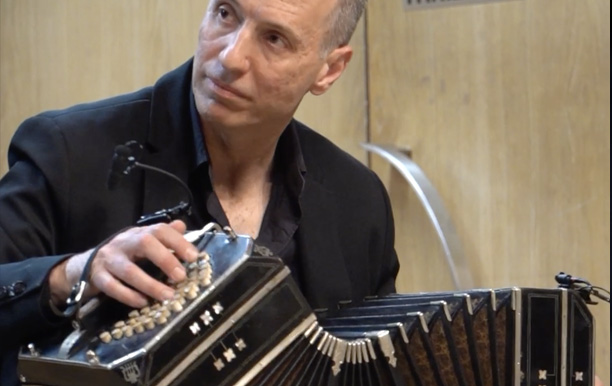
I've mentioned before that the bandoneon is a complex instrument. But that complexity does not stem solely from its button layout or its four different keyboards. If you open a bandoneon and look inside, you begin to understand why it is such a fascinating instrument.
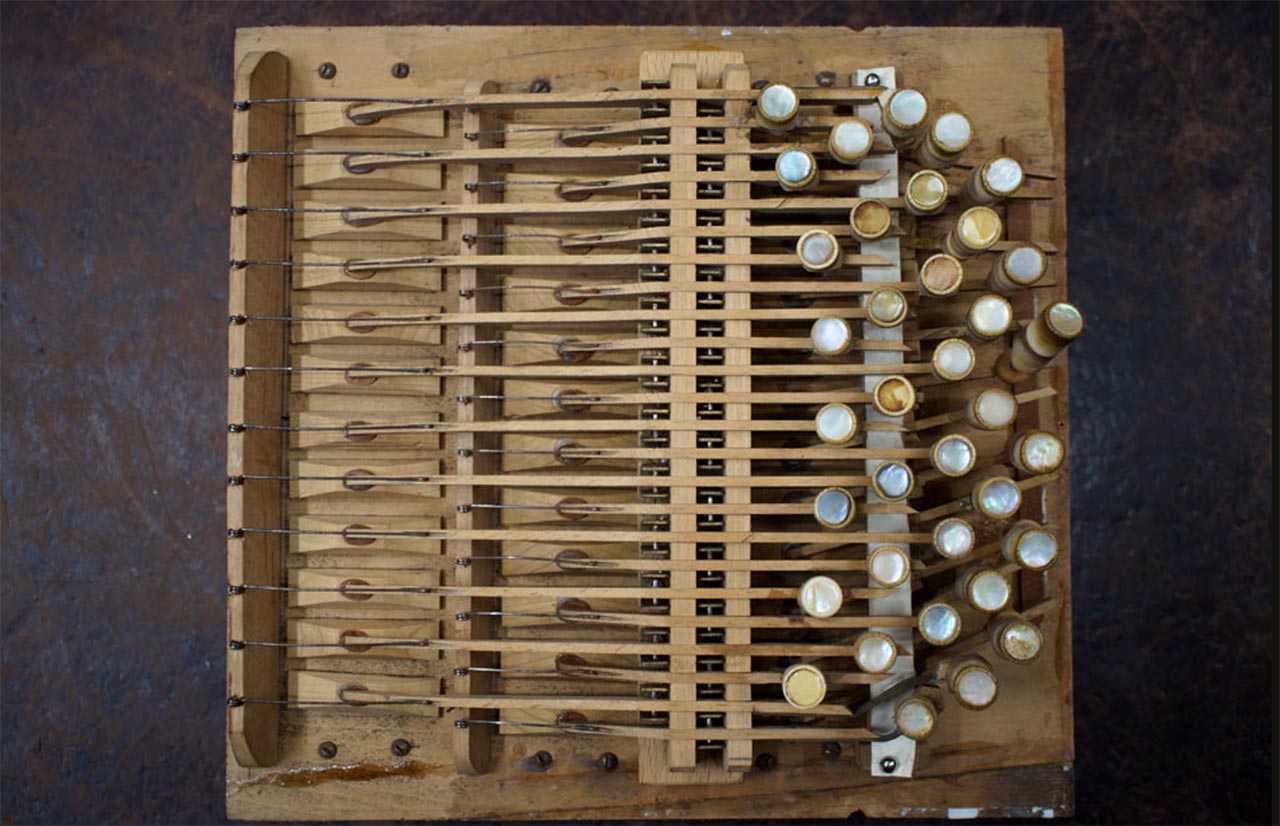
At first glance, the inside of a bandoneon resembles a small woodworking workshop. Wooden components, metal springs of various sizes, valves, and hundreds of moving parts are connected to one another. Behind every button we see on the outside lies a small mechanical system working in perfect coordination.
When you press a button, your finger does not directly produce the sound. First, a wooden lever connected to the button moves and opens a small valve. The airflow generated by the bellows is then directed into the newly opened air channel. A metal reed connected to that channel begins to vibrate, and a musical note is born. As you can see, everything ultimately depends on the movement of air.
What makes the instrument even more interesting is that the same button produces a different sound when opening and closing the bellows. This is because the bandoneon contains two separate reed systems for each button. When the bellows are opened, the air flows in one direction and activates one reed. When the bellows are closed, the airflow reverses and a different reed vibrates instead. As a result, the same button can produce two different notes.
Who designed such a complex system?
The bandoneon, originally developed in Germany, is a remarkable piece of engineering. Every button sets several wooden components in motion simultaneously. And all of this works without electricity, relying entirely on mechanical principles.
The metal strips visible in the photographs are the instrument's true sound producers. These are called reeds. Each reed has a different length, thickness, and weight. Much like a tuning fork, it vibrates at a specific frequency to produce a particular pitch. Some are only a few centimeters long and create high notes, while others are larger and generate deep bass tones.
A significant part of the bandoneon's characteristic sound comes from these metal reeds. Small differences in manufacturing, decades of wear, and the materials used all contribute to the unique voice of each instrument. That is why two different bandoneons rarely sound exactly the same, even when playing the same note.
Perhaps what fascinates me most is that this entire complex mechanism exists for a single purpose: to share emotions in the moment.
From the outside, the bandoneon appears to be little more than a wooden box covered with buttons. Yet once you open it, you discover hundreds of mechanical parts working together with remarkable precision. This entire mechanism exists to convey a tiny breath, a brief pause, or a moment of sadness within a tango phrase.
Wood, metal, and air...
The emotions of tango are born from their union.
Back to Blog