The Crazy Miracle Instrument
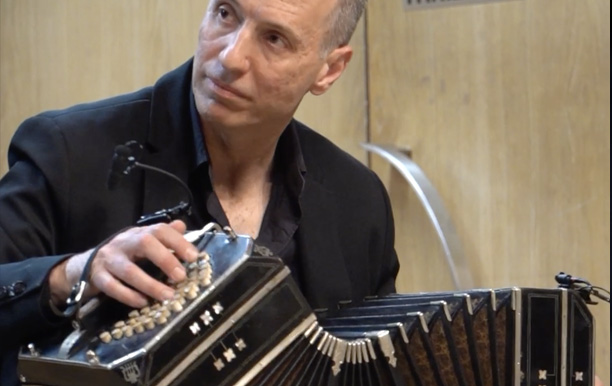
Most people who see a bandoneon for the first time assume that it is an accordion. For years, I have heard the same comment:
"What a beautiful accordion you play!"
To be fair, the confusion is understandable. Both the bandoneon and the accordion belong to the family of bellows-driven instruments, and from the outside they do look somewhat similar. However, in terms of both construction and playing logic, the bandoneon is a very different instrument—and a much, much more complex one.
I have been playing the bandoneon since 2004. I would also recommend reading the story of how I started playing it. Every time I perform, I find myself thinking about how extraordinary and captivating the sound of this difficult-looking instrument really is. Although I have grown accustomed to it over the years, I should first explain its keyboard system if I want you to understand why the bandoneon is such a fascinating machine.
On a piano or most keyboard instruments, pressing a key produces a single note. On an accordion, the direction of the bellows does not matter—the same button always produces the same note. A piano works the same way: one key, one sound.
A bandoneon is different.
Press the same button while opening the bellows and you hear one note. Press the same button while closing the bellows and you hear a different note. Instruments that produce different notes depending on the direction of the bellows are known as diatonic bandoneons.
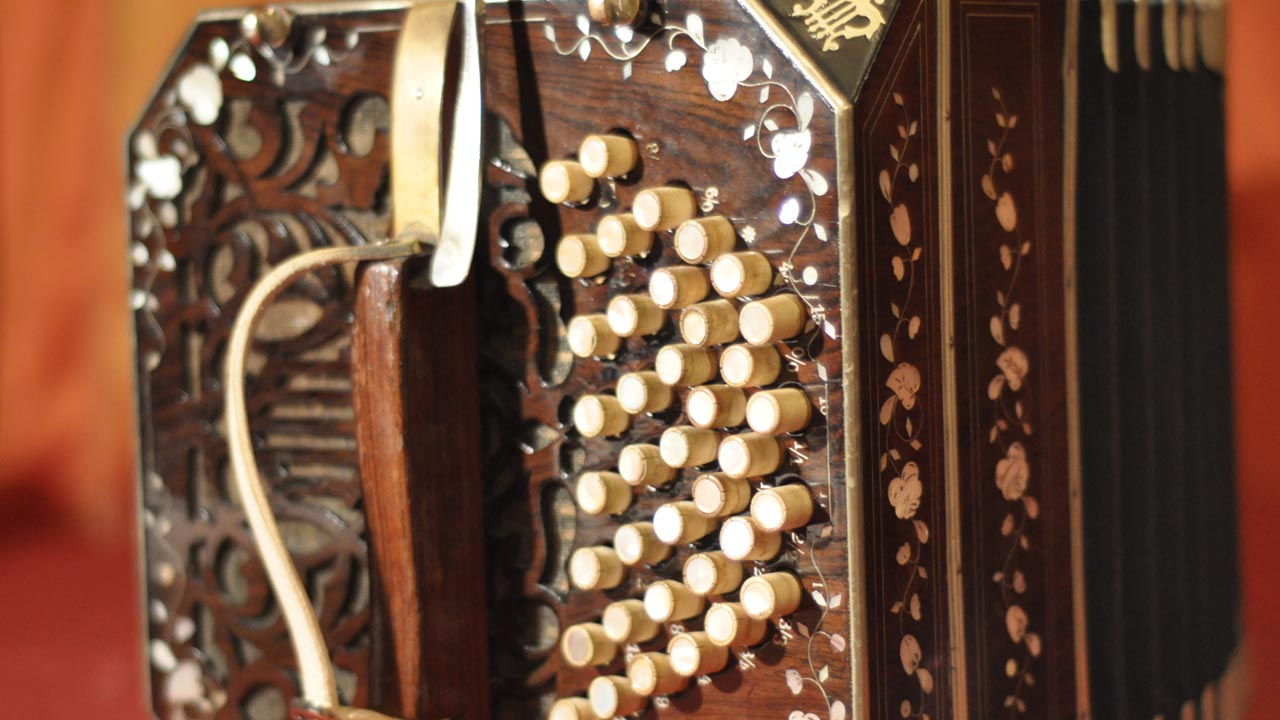
What makes things even more interesting is that the bandoneon has two separate physical keyboards.
There is one keyboard for the right hand and another for the left hand. Since each keyboard produces different notes when opening and closing the bellows, the instrument effectively contains four different keyboards: the right-hand opening layout, the right-hand closing layout, the left-hand opening layout, and the left-hand closing layout.
Imagine cutting a piano in half. Now imagine that the keys are arranged randomly instead of sequentially. Imagine that pressing a key produces one note, while releasing it somehow produces a completely different note. Then imagine the other half of the keyboard doing something equally unpredictable.
It sounds crazy, but that's probably the closest description I can give.
A bandoneon player is constantly switching between these four different systems.
As I mentioned earlier, the buttons themselves do not follow any logical geometric pattern. On a piano, notes are arranged in an orderly sequence from left to right. On a bandoneon, two neighboring buttons may correspond to notes that are very far apart musically.
Learning a melody therefore involves much more than memorizing finger positions. You must also memorize the direction of the bellows. Playing the same melody with a different bellows direction often requires completely different fingerings.
When I play, I often visualize two separate halves flashing in my mind like lightning behind a curtain split down the middle. Through those sparks, I try to bring music to life and express the images and emotions I imagine.
This is one of the reasons why learning the bandoneon is so challenging.
A bandoneon player must constantly think and remain focused. It is not enough to know where the notes are. You must also anticipate the next movement of the bellows.
In that sense, playing the bandoneon resembles playing chess—you always need to think several moves ahead.
With all this complexity, why do people become so passionately attached to the instrument?
The answer lies largely in its sound.
The voice of the bandoneon does not truly resemble any other instrument. It is almost like a human voice speaking while breathing, revealing its emotions as it talks. The breathing motion of the bellows gives life to every note.
That is why listeners often describe the bandoneon as sounding as if it were speaking—or even crying.
This unique voice eventually made the bandoneon the instrument that most powerfully represents the spirit of Argentine tango. Although it was originally developed in Germany, it found its true identity within the tango culture of Buenos Aires. Even though it arrived late to the tango world, it gradually moved to the center of tango orchestras and eventually became the symbol of tango itself.
In my younger years I played or experimented with several instruments, including piano, guitar, and cello.
Yet the effect the bandoneon has had on me has always been different.
Perhaps it is because it is so difficult to learn. Or perhaps it is because of the unique emotional quality carried by its sound.
Whatever the reason, one thing is certain:
The bandoneon is not simply a musical instrument. It is a complex form of expression with a language entirely its own.
As I mentioned earlier, it is a complicated emotion machine. 😍
That is why I sometimes describe this wonderfully crazy instrument as something that does not quite belong to our world—an instrument that arrived from somewhere else, with its instruction manual long since lost.
Back to Blog